小時候,當我們學到一首好詩,老師總會要求我們背誦並默寫全文。而詩歌真正動人的力量,往往在默寫本之外,在生活的細微之處,在那些我們感受美、產生真摯情感的瞬間。When we were young and encountered a good poem, our teachers would often ask us to memorise it and write it out from memory. Yet poetry’s real power to move us often lies beyond the exercise book: in the small details of life, in moments when we experience beauty and feel something sincere.
港大舉辦人文節,在詩歌中感受世界Experiencing the World Through Poetry at HKU’s Humanities Festival
2026年11月5日至15日,香港大學文學院舉辦了香港首屆「Being Human Festival」人文節。作為此次全球性人文節在亞洲的首個主辦方,港大以「十字路口」為主題,在城中各處鋪開了一系列免費公開活動。其中與詩歌直接相關的,是一場名為「香港年輕女性:詩歌寫作與表演」的工作坊,以及11月15日在虎豹別墅舉行的閉幕朗誦表演。From 5 to 15 November 2026, the University of Hong Kong’s Faculty of Arts hosted Hong Kong’s first Being Human Festival. As the global humanities festival’s first host in Asia, HKU brought a series of free public events to locations across the city under the theme “Crossroads”. Poetry featured in a workshop called “Writing and Performing Poetry: Young Women in Hong Kong”, as well as a closing recital at Haw Par Mansion on 15 November.
這場工作坊關注的是那些擁有真實生命經驗的年輕創作者,它讓新一代的聲音透過詩歌被聽見、被看見。這無疑傳遞出一個信號:詩歌的價值,不在於技巧的高下,而在於能否誠實地說出自己的感受。The workshop focused on young writers drawing on lived experience, allowing a new generation’s voices to be heard and seen through poetry. It sends a clear message: the value of poetry lies less in technical virtuosity than in the honesty with which we express our feelings.
寫好一首詩,關鍵在哪裏?What Is the Key to Writing a Good Poem?
在教育實踐中,小編收到不少家長的疑惑:孩子背了很多詩,為什麼還是寫不出東西?因為寫詩的關鍵,超越了單純的詞彙量積累。In our teaching work, parents often ask: my child has memorised so many poems, so why do they still struggle to write? The answer is that writing poetry involves more than simply building a vocabulary.
香港文學的「定海神針」也斯(梁秉鈞)曾提出一個深刻的觀點:他反對「現成的詩意」。他不覺得只有「落花微雨」才是詩,他想寫的是大家在生活裏可以被發現的詩意。城市不管是醜陋還是美麗,關鍵在於你要把它找出來。這也道出了寫詩的核心——教孩子擁有「看見」的能力。觀察先於修辭,感受先於技巧。Leung Ping-kwan, known by his pen name Yesi and regarded as a pillar of Hong Kong literature, offered a profound insight: he rejected “ready-made poetry”. He did not believe that poetry belonged only to falling blossoms and fine rain. He wanted to write about the poetry people can discover in everyday life. Whether a city is ugly or beautiful, the task is to find it. This gets to the heart of teaching poetry: helping children learn to “see”. Observation comes before literary devices, and feeling before technique.
在我們的課堂裏,孩子如何開始寫第一首詩?How Do Children Begin Their First Poem in Our Classroom?
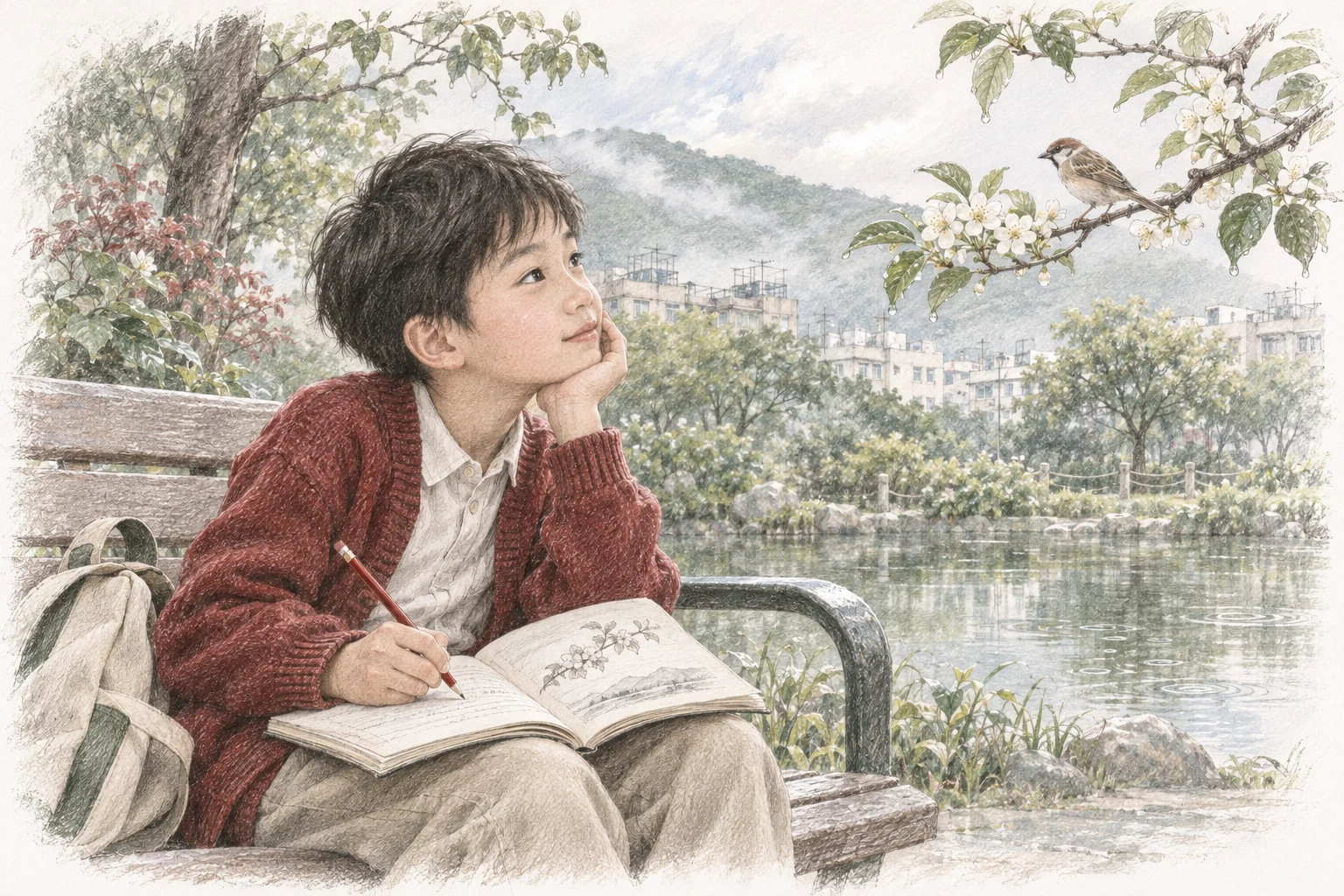
我們的中文課程中,有意讓孩子們在日常的生活經驗中去發現詩意,引導孩子們從他們最熟悉、最貼近的生活入手。比如「臨摹」身邊的風景,或是寫下喜愛的植物。In our Chinese courses, we deliberately encourage children to discover poetry in their everyday experiences, beginning with what is closest and most familiar to them. They might “sketch” the scenery around them in words, or write about a favourite plant.
來看看《半山風景》這首清秀娟麗的小詩:李花在我心,鳥鳴傳美音。綠水映天光,祥瑞照古今。Take this graceful little poem, “A View of Mid-Levels”: plum blossoms in my heart, birdsong carrying beautiful notes; green water reflecting the sky, auspicious light shining through time.
鳥鳴傳美音。
綠水映天光,
祥瑞照古今。Plum blossoms in my heart,
Birdsong carries lovely notes.
Green water mirrors the light of the sky,
Auspicious light shines through past and present.
不妨再看看其他同學的創作:Here are some creations by other students:
但賢者的志向有如長松
雖然經歷風霜
仍然長青不敗Flowers wither in the cold of winter,
But the wise person’s resolve is like a tall pine.
Though it weathers wind and frost,
It remains evergreen, undefeated.
小作者撒下墨汁,創造了一個擁有松柏之堅韌的象徵世界。With ink, the young writer creates a symbolic world with the resilience of pines and cypresses.
下了一場沛然大雨
花草樹木蓬勃生長
感謝上天賜予的恩惠
我徜徉在樂遊原上
沐浴着鳥語花香
願我也能像它們一樣
編織美麗的夢想In the Tang dynasty, thousands of years ago,
A great rain fell.
Flowers, grasses and trees grew vigorously,
Grateful for the blessing from the heavens.
I wander across the Leyou Plain,
Bathed in birdsong and the scent of flowers.
May I, like them,
Weave beautiful dreams.
這首現代詩中,小作者設計了古今時空的交錯,將思緒拉回千年前的一場大雨,描寫雨水對大自然花草樹木的滋養,表達出對自然界的熱愛與感恩之情。In this modern poem, the young writer interweaves past and present, travelling in thought to a rainstorm a thousand years ago. The rain nourishes flowers, grasses and trees, expressing love and gratitude for the natural world.
這些詩句雖無華麗辭藻,卻充滿了細膩的觀察、有趣的想象和屬於孩子自己的邏輯。正如也斯所說,在生活細節中發現詩意。These lines may not use ornate language, but they are full of close observation, engaging imagination and a logic that belongs to the children themselves. As Yesi suggested, poetry can be found in life’s small details.
從創作到鑒賞,保護孩子的觀察力From Writing to Appreciation: Protecting a Child’s Powers of Observation
寫出來只是第一步。在我們的課程裏,我們還會引導孩子對自己的作品進行詩歌鑒賞。當孩子嘗試去分析自己為什麼這樣寫、哪一句最有力量時,他們對文字的敏感度會呈指數級上升。來看看這篇經批改後的鑒賞作品:Putting words on paper is only the first step. In our courses, we also guide children in appreciating and analysing their own poems. When they explore why they chose particular words and which line is most powerful, their sensitivity to language grows enormously. Here is an appreciation after teacher feedback:
《半山風景》詩歌鑒賞An Appreciation of “A View of Mid-Levels”
《半山風景》是一首五言絕句。整首詩韻律優美,讀起來頗有音樂感,通過「李花」「鳥鳴」「綠水」等意象,展現出我所居住的家園附近的美麗環境。本文將從詩歌的創意性和押韻的處理兩個角度對這首詩進行賞析。“A View of Mid-Levels” is a five-character quatrain. Its pleasing rhythm gives it a musical quality. Images such as plum blossoms, birdsong and green water reveal the beautiful surroundings near my home. This appreciation considers the poem’s creativity and its use of rhyme.
詩歌有獨特的設計,將作者名字滲透在「李花在我心」和「祥瑞照古今」兩句詩中,增添了詩歌的趣味和創意性。本首詩歌因名字具備獨特性,因此十分特別,而且以名賦詩的形式,也讓詩歌的表達更加新穎。The poem has an unusual design: the writer’s name is woven into “Plum blossoms in my heart” and “Auspicious light shines through past and present”. This adds interest and creativity. The personal name makes the poem distinctive, and building a poem around a name gives its expression a fresh quality.
這首詩不僅具有獨特的設計,而且在押韻方面也頗有考究。The poem is distinctive in its design and also pays careful attention to rhyme.
《半山風景》一詩很有音樂感。在全詩中,押韻押的是「in」韻,如「心」「音」和「今」。之所以這樣創作,是希望詩歌讓讀者更加記憶深刻,並且讀起來能夠產生抑揚頓挫之感,如同演唱一首音樂感極強的歌曲。“A View of Mid-Levels” has a musical quality. It uses the “in” rhyme, as in 心 (xīn), 音 (yīn) and 今 (jīn). This is intended to make it more memorable and give the reading a rise and fall, like singing a particularly musical song.
這首詩不論是創意的運用,還是押韻的考究都頗有意味。「李花」「鳥鳴」「綠水」和「祥瑞」等意象,更是將美好的半山風景展現得一覽無餘,進而含蓄地表達出我對居住半山的美好生活的滿足和大自然風光的讚美之情。Both the creative approach and the attention to rhyme are meaningful. Images of plum blossoms, birdsong, green water and auspicious light reveal the beauty of Mid-Levels, quietly expressing my contentment with life there and my admiration for the natural scenery.
在批改時,我們不僅修正用詞,更重要的是保護孩子們那份獨特的靈性與觀察力。通過「創作+鑒賞+批改」的閉環,培養孩子深度閱讀與寫作能力。When giving feedback, we do more than correct word choices. More importantly, we protect each child’s distinctive imagination and powers of observation. The cycle of writing, appreciation and feedback develops deeper reading and writing skills.
讀詩時,用心感受往往比完全讀懂更重要When Reading Poetry, Feeling Can Matter More Than Understanding Every Word
讀詩的能力或許無法完全被考試衡量,但它決定了一個人感受世界的顆粒度。一個能在一場雨裏讀出節奏的孩子,面對的是更豐富、更立體的世界。An exam may never fully measure the ability to read poetry, but that ability shapes how finely we perceive the world. A child who hears rhythm in the rain encounters a richer, more layered world.
港大舉辦人文節,把詩歌從書架上請下來,放到社區裏、街市中、年輕人之間。我們的課堂也在做同一件事:讓孩子相信,自己心裏那些細微的、說不清的、一閃而過的感受,值得被寫成詩。他們也正在一次次嘗試中,獲得書寫的能力。HKU’s humanities festival brings poetry down from the bookshelf and into communities, markets and the lives of young people. Our classrooms are doing the same: helping children believe that the small, elusive, fleeting feelings within them deserve to become poetry. With each attempt, they grow in their ability to write.